WADE F. MACDONALD
  • H O M E
  • I N F O
    • C U R R E N T
    • U P C O M I N G
    • C V
    • S T A T E M E N T
    • P H I L O S O P H Y
    • S T O R E
    • C O N T A C T
  • W O R K
    • 2 0 2 5
    • 2 0 2 4
    • 2 0 2 3
    • 2 0 2 2
    • 2 0 2 1
    • 2 0 2 0
    • 2 0 1 9
    • 2 0 1 8
    • 2 0 1 7
    • 2 0 1 6
    • 2 0 1 5
    • 2 0 1 4
    • 2 0 1 3
    • 2 0 1 2
  • S O L O
    • L E T H A L - L O U N G E - V 2
    • L E T H A L - L O U N G E - V 1
    • E D E N - B E R R Y
    • S E P T E M - S P E C U L I S
    • E D E N - A U B U R N
    • S H A D O W T I M E
    • A R C H I - M I R R O R S
  • 2 - P E R S O N
    • P I N K - M O O N
    • E T E R N A L
    • G H O S T S K I N
    • S W E E T - M E T A L
  • P R O J E C T S
    • 4 0 - Y E A R S
    • C A P R I C I O U S
    • N E X T - V E R S E S
    • C L A Y+/ I N V I T A T I O N A L
    • C L A Y +
    • P A R A L L E L / C O L L I S I O N
    • N C E C A - E A
    • S Y N T H E T I C - A C T I O N
    • F O R M & F I R E

SANAA ARCHITECTS: (Architectural Environments for Tomorrow: New Spatial Practices in Architecture and Art)

7/17/2014

0 Comments

 
Picture
Exhibition Outline

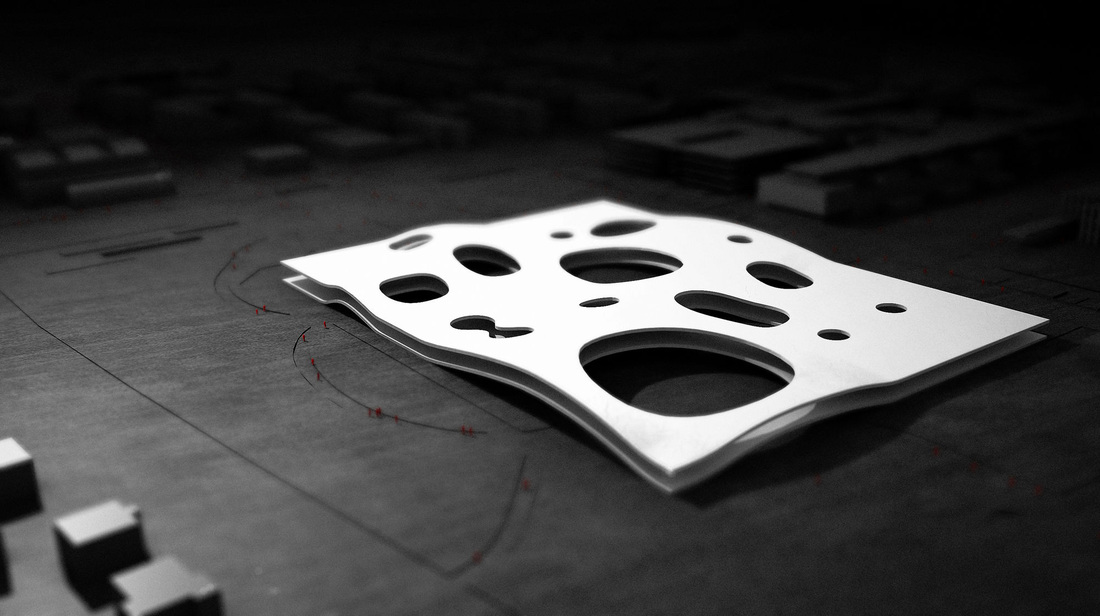
The spread of computerization and urbanization since the beginning of the twenty-first century has given birth to new lifestyles and forms of public space. This exhibition will look at the way in which architects and artists respond to environmental and urban problems, demographic growth and change, as well as other transformations in our surroundings, expressing them through their ideas and experiments in spatial structure. The spaces they create introduce people to new experiences or approaches, exposing the latent possibilities that may exist in the environment. The metaphors of the world-views suggested by the artists resonate with the practical proposals of the architects, presenting images of future 'humanity' from a variety of differing angles.

Natural disasters, such as the 3.11 earthquake, or political and social unease always exist in some form or another throughout the world. Against this backdrop, what kind of existence can architecture provide for the people? In this exhibition, we will present the 'discoveries' that are made when universal architectural expression, inspired by the diverse experiences and ideas of people, nature and society, both in Japan and around the world, is fused with local wisdom and technology.

28 architects and artists from 14 countries will introduce their experiments and achievements through models, drawings, images, sculpture, photographs and mixed-media installations. It will involve more than just the sense of sight, the exhibition space itself, which appeals to the body and senses as an 'Architectural Environments for Tomorrow', represents yet another statement.

This exhibition will take place as a part of the Tokyo Art Meeting section of the Tokyo Culture Creation Project. - 
http://www.mot-art-museum.jp/eng/2011/archi/index.html
SANAA VIDEO: http://youtu.be/TDTRrMegKyQ
0 Comments

STUDIO GANG ARCHITECTS - NEW PROJECT IN KALAMAZOO, MI

7/16/2014

0 Comments

 
Picture
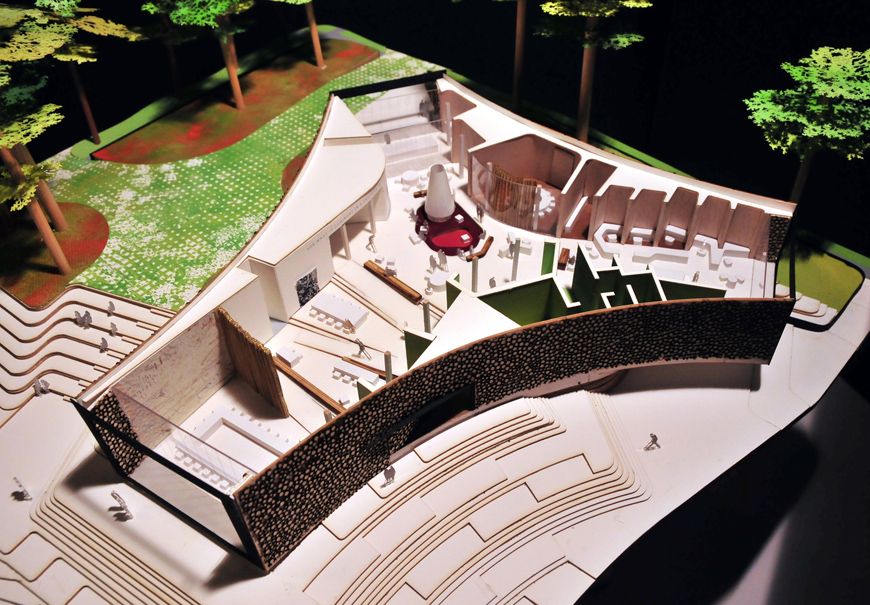
Organized as a welcoming crossroads for convening, the 10,000 sf Arcus Center for Social Justice Leadership at Kalamazoo College is designed to support the Center's important mission and work in multiple ways. Upon completion, it will be the world's first purpose-built structure for social justice leadership development: a study, meeting, and event space where students, faculty, visiting scholars, social justice leaders, and members of the public will come together to engage in conversation and activities aimed at creating a more just world.

The Center is sited to engage its three immediate contexts—the college campus, a residential neighborhood, and an old-growth grove of trees—by drawing their topography into the building and outwardly projecting the activities taking place within through transparent façades.

The gently curving walls connecting these façades are constructed with wood masonry, a low-carbon, highly insulating building method traditional to the surrounding region, updated by Studio Gang to respond to the needs of a contemporary institutional building for the first time. - http://studiogang.net/work/2010/arcuscenter

http://youtu.be/dlS-o070KAU

http://studiogang.net/work/2010/arcuscenter
0 Comments

MAX KREHAN, tHEODOR BOGLER & OTTO LINDIG: THE BAUHAUS CERAMIC WORKSHOP

7/15/2014

0 Comments

 
Picture
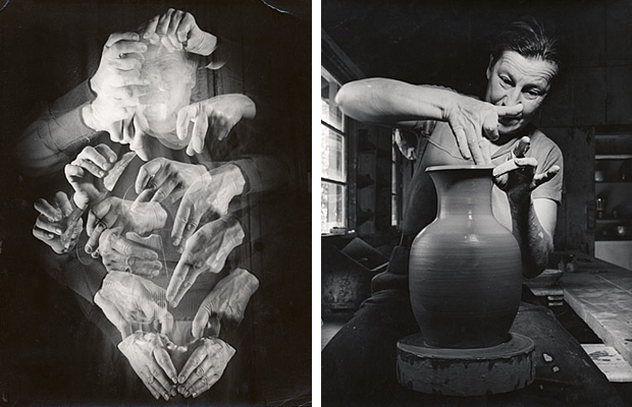
The Bauhaus’s ceramics workshop started out in Dornburg at the workshop of the master potter Max Krehan. Here, ceramic vessels, some of them experimental, were made in collaboration with the sculptor and master of form, Gerhard Marcks. In 1923, the pottery workshop made a technological leap by moving from the potter’s wheel to ceramic casting. This is also where prototypes for serial production were made. The ceramics workshop was not continued in Dessau.

As one of the first workshops at the Bauhaus, the ceramics workshop was opened as early as 1919 at a Weimar furnace factory. In 1920, the workshop moved to Dornburg, Saale. This was just 20 kilometres away and offered enough space for student accommodation as well as the workshop. Until 1925, Gerhard Marcks was head of the workshop. The renowned master potter Max Krehan was the master of works from 1920 to 1925.

Initially, the workshop only produced simple ceramics for everyday use with the plain glazes typical of the Bauhaus. Due to Walter Gropius’ orientation towards technology and the new goal of creating models for industrial mass production, the workshop was divided into an apprentice workshop for training and an experimental and production workshop. Prototypes for industrial production included Theodor Bogler‘s Mocha Machine, which was made using a casting process, and his combination teapot, which was based on the modular design principle. The workshop maintained contacts with several earthenware and porcelain factories, presenting its products at trade fairs and at the Stuttgart exhibition of the Werkbund (German Work Federation) of 1924.

The ceramics workshop did not survive the move to the Bauhaus Dessau. Otto Lindig, the former head of the production workshop, continued a part of the ceramics workshop at the Staatliche Bauhochschule (state school for architecture) in Weimar. - http://bauhaus-online.de/en/atlas/das-bauhaus/werkstaetten/keramikwerkstatt

http://bauhaus-online.de/en/atlas/das-bauhaus/werkstaetten/keramikwerkstatt

http://germanmodernism.com/designers/view/24

http://bauhaus-online.de/en/atlas/personen/otto-lindig
0 Comments

DEL HARROW

7/14/2014

1 Comment

 
Picture
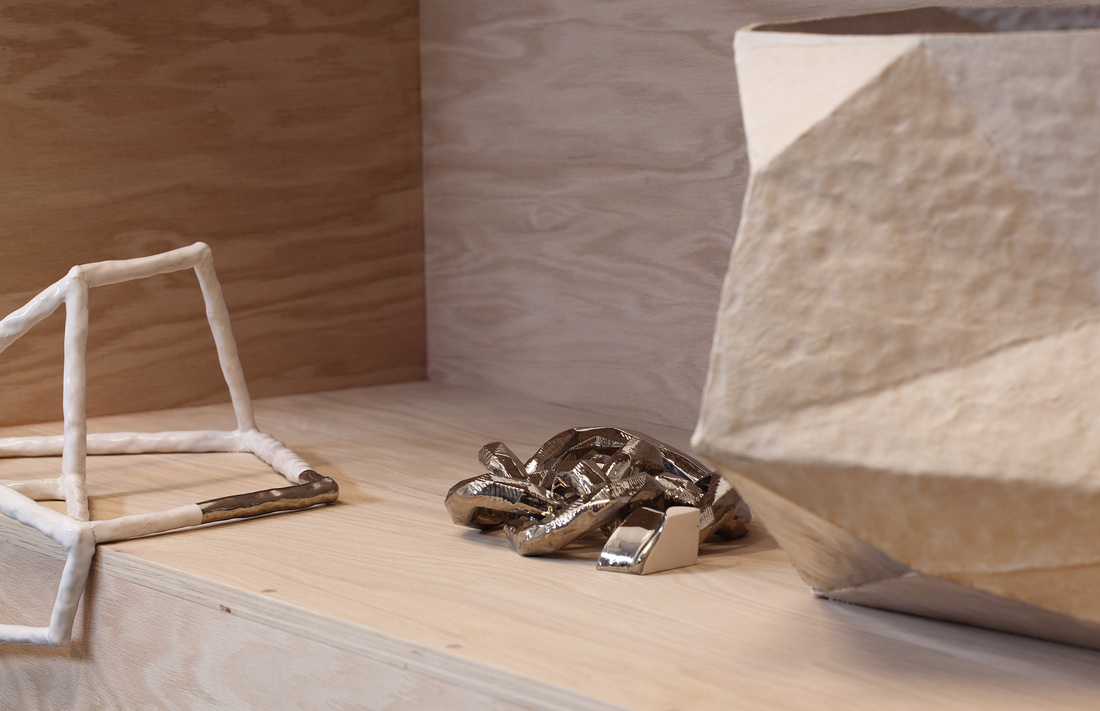
Del Harrow is a sculptor and educator based in Fort Collins, Colorado. His work in ceramics explores the intersection of digital design with manual and skill-based fabrication processes. His production covers a vast range of scales, from the architectural to the minute, and his conceptual considerations range from the natural landscape to fractal geometry. Harrow is an assistant professor of art at Colorado State University and taught previously at Penn State University and the Kansas City Art Institute. He has taught a number of workshops (recently at Penland School of Crafts, Haystack Mountain School of Crafts, and Cranbrook Academy of Art) that address digital and parametric modeling in conjunction with analog fabrication and "hands-on" work with clay. He has exhibited recently at the Denver Art Museum, Vox Populi Gallery in Philadelphia, and Dolphin Gallery in Kansas City. - https://www.cca.edu/calendar/2012/lecture-del-harrow
http://www.delharrow.net
1 Comment

THE "Z" LOT - SOLVING A HUGE DETROIT PROBLEM

7/13/2014

0 Comments

 
Picture
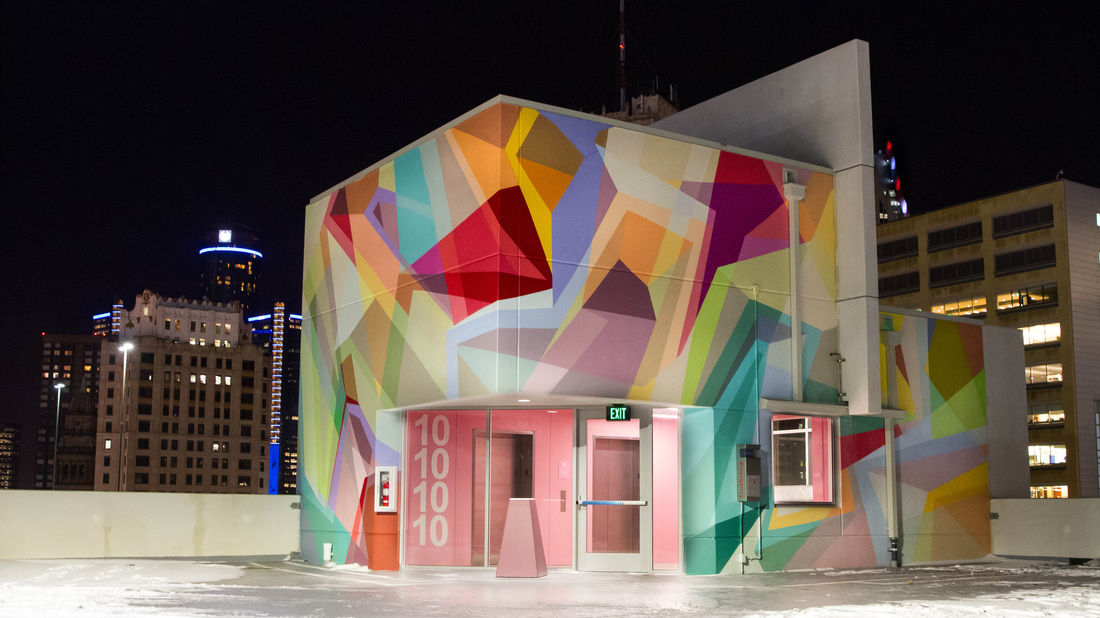
Saying there is parking trouble downtown is a little like saying water is wet. That’s where “The Z,” a new flashy place to park with 1,300 parking spaces on Library Street, comes in.  With Detroit’s population growing the past few years as more people come downtown to live, work and play it is certainly a logical idea whose time may have arrived at the perfect time.

Take a look at these stats. Today there are 13,000 new employees downtown bringing the total to 85,000. By 2016 that is expected to grow to 100,000. Add to that the growing number of people coming downtown for events and other things and it is clear Detroit needs more parking.

The name of the new structure comes from the shape of the building.  The 10-story, 535,000 square-foot building zigzags into the shape of the letter “Z.” - http://blog.thedetroithub.com

http://blog.thedetroithub.com/2014/02/05/the-z-lot-helps-solve-a-huge-detroit-problem-where-do-i-park/
0 Comments
<<Previous
Forward>>

    Archives

    November 2016
    September 2016
    March 2016
    October 2015
    July 2015
    May 2015
    March 2015
    February 2015
    January 2015
    December 2014
    November 2014
    October 2014
    September 2014
    August 2014
    July 2014
    June 2014
    May 2014

© COPYRIGHT 2015. ALL RIGHTS RESERVED.